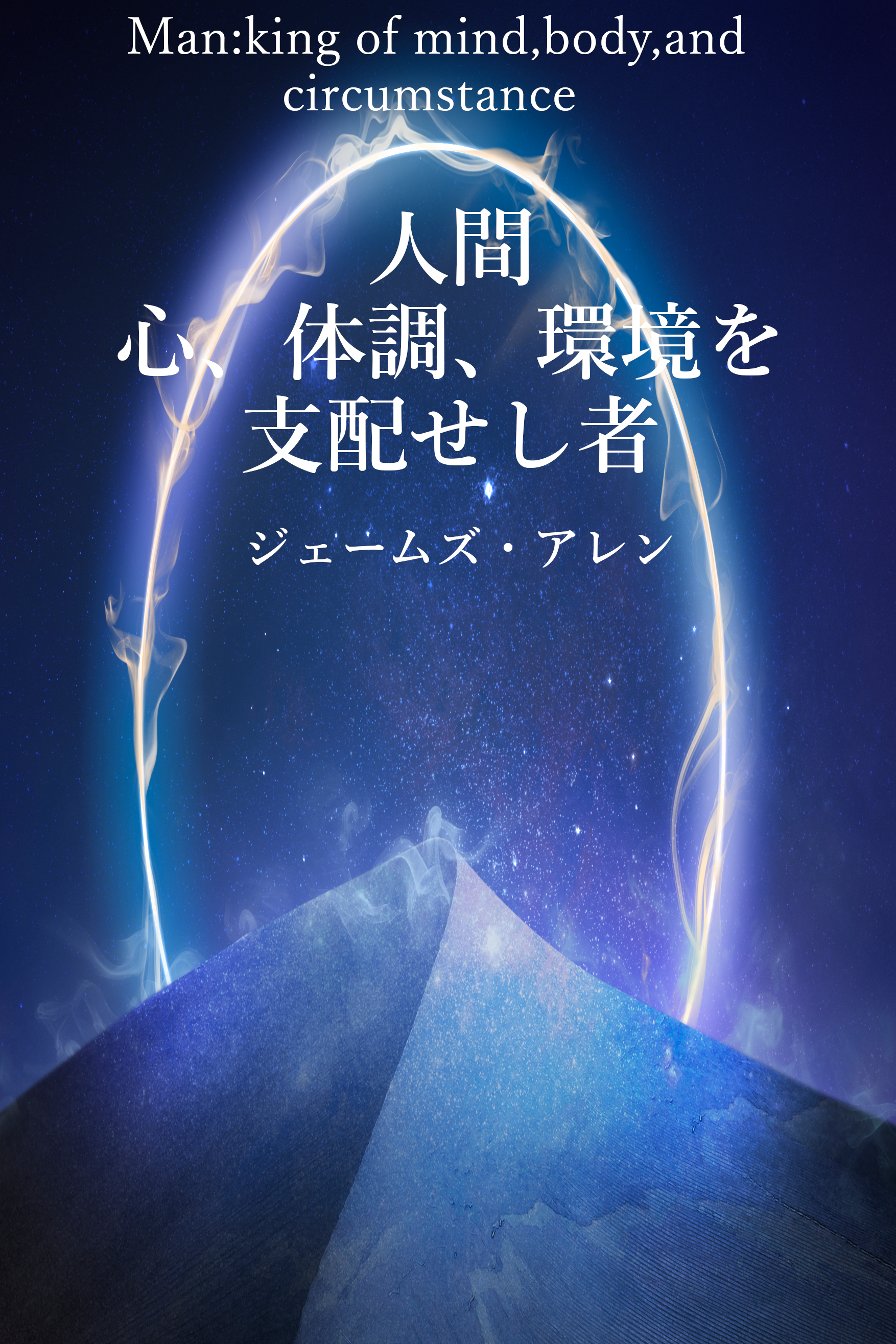
ジェームズ・アレンの晩年の著作であり日本ではあまり翻訳が出回っていない本。習慣の作り方や環境を変える方法、貧困の根本解決などに気付きを与える名著です。
●序文
人生の問題は、生き方を学ぶことで解決します。小学生の足し算引き算の問題のようなものです。いったん生き方を習得してしまえば、人生の困難はなくなり、問題もおのずと消えます。
●Foreword
The problem of life consists in learning how to live. It is like the problem of addition or subtraction to the schoolboy. When mastered, all difficulty disappears, and the problem has vanished.
社会的、政治的、宗教的であろうと、人生のあらゆる問題は対処法を知らないことと誤った生き方の中に存在します。それらの問題が各個人で解決されていくことで、多くの人々の中でも解決されるでしょう。現在の人類は、「学習」という苦しい段階にあります。自分自身の無知による困難に直面しているのが現状です。
All the problems of life, whether they be social, political, or religious, subsist in ignorance and wrong-living. As they are solved in the heart of each individual, they will be solved in the mass of men. Humanity at present is in the painful stage of “learning.” It is confronted with the difficulties of its own ignorance.
人間が正しく生きることを学び、知恵の光によって自分の力を引き出し、本来の機能や能力を活用することを学ぶとき、人類全体が正しい方向に進むようになり、そのように生き方が上手になることによってすべての「悪の問題」に終止符が打たれるでしょう。
As men learn to live rightly, learn to direct their forces and use their functions and faculties by the light of wisdom, the sum of life will be correctly done, and its mastery will put an end to all the “problems of evil.”
賢明な人にとって、そのような問題はすべて消滅するものなのです。 ジェームズ・アレン
To the wise, all such problems have ceased. JAMES ALLEN
内にも周囲にも上にも下にも、目に見えないが宇宙の法則は力を蓄え、知恵の導きを待っている。さあ!本来の性質を活かそう、 そうすれば良い結果を引き出せるのです。悪い結果になるのは、使い方を間違えるからです。よい結果のために、賢明に法に則って生きましょう。
Within, around, above, below,The primal forces burn and brood,Awaiting wisdom’s guidance; lo! All their material is good:Evil subsists in their abuse;Good, in their wise and lawful use.
●1. 思考の内なる世界
人は幸福と不幸を生み出します。人間とは自分自身の幸福と不幸の創造者であり、幸不幸を継続するのも自分自身の手によってです。誰かから強制されたものではなく、自分自身の手によって決めたものです。
1. The inner world of thoughts
Man is the maker of happiness and misery. Further, he is the creator and perpetuator of his own happiness and misery. These things are not externally imposed; they are internal conditions.
幸不幸の原因とは、神でも悪魔でも環境のせいでもありません。人の目に見えない思考が、その原因です。
Their cause is neither deity, nor devil, nor circumstance, but Thought.
人が受ける様々な運命は、行動の結果であり、行動とは思考が一部が目に見える形で現れたものです。習慣化した心の状態から行動が生まれ、その行動から幸福と不幸が生まれます。
They are the effects of deeds, and deeds are the visible side of thoughts. Fixed attitudes of mind determine courses of conduct, and from courses of conduct come those reactions called happiness and unhappiness.
このことから、運命に流されるままの状態を変えるには、思考を変えなければならないということになります。不幸を幸福に変えるには、不幸の原因である心の状態や習慣的な行動を逆転させる必要があり、逆転した結果が心と人生に現れます。
This being so, it follows that, to alter the reactive condition, one must alter the active thought. To exchange misery for happiness it is necessary to reverse the fixed attitude of mind and habitual course of conduct which is the cause of misery, and the reversed effect will appear in the mind and life.
人は自分勝手に考え、自分の幸せのためだけに行動している間は幸せになることはできません。一方、周囲や世界の人々の幸せのために考え行動している人は不幸になりえません。原因があれば必ず結果が現れます。人間はこれから起こる結果をなくすことはできませんが、結果を引き起こす原因を変えることはできます。
A man has no power to be happy while thinking and acting selfishly; he cannot be unhappy while thinking and acting unselfishly. Wheresoever the cause is, there the effect will appear. Man cannot abrogate effects, but he can alter causes.
人は自分の手で、自分自身を良い方向に進化させることができます。自分の性格も作り直すことができます。人間とは自己に打ち勝つための大きな力を持っているのです。そして、自分を良い方向に変えることには大きな喜びが伴います。
He can purify his nature; he can remould his character. There is great power in self-conquest; there is great joy in transforming oneself.
人はそれぞれ自分の思考の状態によって限界がありますが、少しづつその限界を広げることができます。人は自分の世界を広げ、自分自身を向上させることができます。低いレベルを離れ高いレベルに成長することができるのです。
Each man is circumscribed by his own thoughts, but he can gradually extend their circle; he can enlarge and elevate his mental sphere. He can leave the low, and reach up to the high;
暗く逆恨みに満ちた考えを抱くことを控え、明るく美しい思考を持つことができます。そして、成長するにつれて、より高い力とよりよい性格を身につけることができ、より世界の美しさを知るようになるでしょう。
he can refrain from harbouring thoughts that are dark and hateful, and can cherish thoughts that are bright and beautiful; and as he does his, he will pass into a higher sphere of power and beauty, will become conscious of a more complete and perfect world.
人は思考の状態に応じて、さまざまな世界に住んでいます。それぞれの人の世界は、その人達の思考と同じ状態になります、狭く暗い世界の住人もいれば広く輝かしい世界に住んでいる人もいます。
For men live in spheres low or high according to the nature of their thoughts. Their world is as dark and narrow as they conceive it to be, as expansive and glorious as their comprehensive capacity. Everything around them is tinged with the colour of their thoughts.
疑い深く、欲深く、嫉妬深い心を持っている人のことを考えてみましょう。その人には全てがどれほど小さく、卑劣で、恐ろしいものに見えるでしょうか。心の中に壮大さを持たないので、世界のどこにも壮大さを感じません。その人自身が卑劣であるため、いかなる存在にも気高さを見ることができません。
Consider the man whose mind is suspicious, covetous, envious. How small and mean and drear everything appears to him. Having no grandeur in himself, he sees no grandeur anywhere; being ignoble himself, he is incapable of seeing nobility in any being.
その暗黒の世界では、神ですら賄賂を受け取ることができる貪欲な存在です。すべての男女が自分と同じように卑劣で利己的であると判断し、そのため大変素晴らしい世のため人のためになる行動を見ても、下衆の勘繰りで偽善など卑劣な動機しか見ないのです。
Even his God is a covetous being that can be bribed, and he judges all men and women to be just as petty and selfish as he himself is, so that he sees in the most exalted acts of unselfishness only motives that are mean and base.
疑いを持たず、寛大で、広い心を持っている人のことをもう一度考えてみましょう。その人の世界はなんと素晴らしく美しいことでしょう。すべての生き物や存在の中に美しさや気高さを見出します。人の素晴らしい部分を見出し、それが真実となります。
Consider again the man whose mind is unsuspecting, generous, magnanimous. How wondrous and beautiful is his world. He is conscious of some kind of nobility in all creatures and beings. He sees men as true, and to him they are true.
その人の前にいると、その純粋で絶大な影響から、卑劣な人でさえも自分の本性を忘れ、しばらくの間、寛大で広い心を持つようになり、戸惑いながらも一時的に引き上げられた世界の中で、計り知れないほど素晴らしい幸福な人生を垣間見ることができます。
In his presence the meanest forget their nature, and for the moment become like himself, getting a glimpse, albeit confused, in that temporary upliftments of a higher order of things, of an immeasurably nobler and happier life.
心の狭い男と、この心の広い男は、隣り合っていても、二つの異なる世界に住んでいます。二人の意識は全く異なる世界を見ています。二人の行動はお互いに全く逆です。二人の物の見方は正反対です。それぞれ、物事の異なる部分に注目しています。
That small-minded, and this large-hearted, man live in two different worlds, though they be neighbours. Their consciousness embraces totally different principles. Their actions are each the reverse of the other. Their moral insight is contrary. They each look out upon a different order of things.
二人の住んでいる世界は別々であり、二つの独立した円のように、決して交わることはありません。一方は地獄にあり、もう一方は天国にあり、たとえ死であってもこれ以上の大きな断絶を作ることはないでしょう。
Their mental spheres are separate, and, like two detached circles, they never mingle. The one is in hell, the other in heaven as truly as they will ever be, and death will not place a greater gulf between them than already exists.
ある人にとって、世界は泥棒の住処です。また別の人にとっては、世界は神々の住処なのです。
To the one, the world is a den of thieves; to the other, it is the dwelling-place of Gods.
一方の人は拳銃を手元に置き、常に強盗や騙されないように警戒しており(自分自身も無意識にいつも強盗や騙しをしているという事実に気づいていない)、もう一方の人は最高の人生の準備をし続けています。その人は才能、美しさ、天啓、善良さへの扉を開きます。
The one keeps a revolver handy, and is always on his guard against being robbed or cheated (unconscious of the fact that he is all the time robbing and cheating himself), the other keeps ready a banquet for the best. He throws open his doors to talent, beauty, genius, goodness.
その善良な人の友人たちも、しっかりと実践でき身についている誇り高い性格を持っています。すべてはその人の思考・意識の世界にあります。その人の心から気高さが溢れ出し、その波動は発信した人を愛し、敬意を払う多くの人々の中で何倍にもなってその人に戻ってきます。
His friends are of the aristocracy of character. They have become a part of himself. They are in his sphere of thought, his world of consciousness. From his heart pours forth nobility, and it returns to him tenfold in the multitude of those who love him and do him honour.
人間社会における自然な棲み分け――それは思考と、そこから生まれる行動による区分以外の何があるでしょうか?プロレタリア階級の人はこれらの区分に異を称えるかもしれませんが、その棲み分けを変えたり、影響を与えたりはできません。
The natural grades in human society - what are they but spheres of thought, and modes of conduct manifesting those spheres? The proletariat may rail against these divisions, but he will not alter or affect them.
もともとの性質に似ている部分がなく、人生の基本的な原理によって分かれた世界を、無理やり人の力で一緒にすることはできません。
There is no artificial remedy for equalising states of thought having no natural affinity, and separated by the fundamental principles of life.
無法者と法を守る人は別の世界に分断されていて、両者を隔てるのは憎しみやプライドではなく、道徳原則においてのお互いにかけ離れた思考や行動習慣です。
The lawless and the law-abiding are eternally apart, nor is it hatred nor pride that separates them, but states of intelligence and modes of conduct which in the moral principles of things stand mutually unrelated.
無作法で礼儀の悪い人は、自分自身の精神性という越えられない壁によって、穏やかで洗練された人の輪から締め出されています。その壁は、辛抱強く自己改善することで取り除くことはできても、下品な侵入によっては決して乗り越えることができません。
The rude and ill-mannered are shut out from the circle of the gentle and refined by the impassable wall of their own mentality which, though they may remove by patient self-improvement, they can never scale by a vulgar intrusion.
本当の幸せは暴力によって奪いとることはできません、原則に従う人だけが、そこに入るための鍵を受け取ります。悪の思考の持ち主は悪の世界の範囲内で動きます。
The kingdom of heaven is not taken by violence, but he who conforms to its principles receives the password. The ruffian moves in a society of ruffians;
聖人は天国の音楽を共有する仲間の一人です。すべての人は自分自身を反射する鏡です。すべての人は、人や世界を見るときに、自分自身を映す鏡を覗き込んでいます。
the saint is one of an elect brethren whose communion is divine music. All men are mirrors reflecting according to their own surface. All men, looking at the world of men and things, are looking into a mirror which gives back their own reflection.
狭かったり広かったりしますが、人はそれぞれ、自分の世界の中で生きています。そして、自分の世界の外側にあるものはすべて存在しないのと一緒です。人は自分が経験したものしかわからないのです。
Each man moves in the limited or expansive circle of his own thoughts, and all outside that circle is non-existent to him. He only knows that which he has become.
自分の世界・つまり思考の範囲が狭ければ狭いほど、「井の中蛙大海を知らず」で、これ以上の限界はなく、他の価値観も存在しないと思うようになります。より小さな円はより大きな円を囲うことはできず、その人にはより大きな世界を知る手段がありません。成長によってのみ、広がった世界を知ることができるのです。
The narrower the boundary, the more convinced is the man that there is no further limit, no other circle. The lesser cannot contain the greater, and he has no means of apprehending the larger minds; such knowledge comes only by growth.
広く拡がった成長した思考の中で生きる人は、自分が以前に経験した小さな思考のことをよく知っています。なぜなら、より大きな経験の中に、より小さな経験はすべて含まれるからです。
The man who moves in a widely extended circle of thought knows all the lesser circles from which he has emerged, for in the larger experience all lesser experiences are contained and preserved;
また、さらに思考の世界が広がり完全な人間性の領域に到達しようとするとき、そして非の打ちどころのない行動や深い理解を持つ人たちとの付き合いや交わりにふさわしい人間の成長できたとき、その時、その人の知恵は、自分がまだキチンと把握できていない、もしくはまったく知らない、より広い世界がまだあることを理解することができるようになるでしょう。
and when his circle impinges upon the sphere of perfect manhood, when he is fitting himself for company and communion with them of blameless conduct and profound understanding, then his wisdom will have become sufficient to convince him that there are wider circles still beyond of which he is as yet but dimly conscious, or is entirely ignorant.
人は、学生と同様に、知識の程度によってさまざまな階級・学年に割り当てられます。6年生の内容は、一年生の理解の範囲を超えていて、1年生の少年にとっては謎でしかありません。
Men, like schoolboys, find themselves in standards or classes to which their ignorance or knowledge entitles them. The curriculum of the sixth standard is a mystery to the boy in the first; it is outside and beyond the circle of his comprehension;
しかし、たゆまぬ努力と学習における忍耐強い成長によって理解できるレベルまで成長することができます。その間のすべての内容を習得し、段階をあがっていくことで、最終的に6年生のレベルまで到達し、学習することができます。そして、さらにその先には教師の領域があります。
but he reaches it by persistent effort and patient growth in learning. By mastering and outgrowing all the standards between, he comes at last to the sixth, and makes its learning his own; and beyond still is the sphere of the teacher.
したがって、人生において、行いが悪く情欲や自分勝手な欲望に満ちている人は、行いが良く利他的で、心が穏やかで深みがあり、澄んだ心の持ち主のことを理解することはできません。しかし、正しい行いの努力や思考の成長によって、このより高いレベル、この広く広大な意識に到達することができます。
So in life, men whose deeds are dark and selfish, full of passion and personal desire, cannot comprehend those whose deeds are bright and unselfish, whose minds are calm, deep, and pure, but they can reach this higher standard, this enlarged consciousness, by effort in right doing, by growth in thought and moral comprehension.
そして、あらゆるレベルの基準を超え、人類の教師、宇宙のマスター、さまざまな宗教の信奉者が崇拝する世界の救世主がいます。
And above and beyond all lower and higher standards stand the Teachers of mankind, the Cosmic Masters, the Saviours of the world whom the adherents of the various religions worship.
教師にも生徒と同様にレベルがあり、まだ師範の地位や地位に達していないにもかかわらず、その人格の純粋な道徳性によって指導者であり教師である人もいます。しかし、説教壇や演壇に立つことで人が教師になるわけではありません。人間は、人類の尊敬と敬意を呼び起こす成長した心の偉大さによって心の教師となることができるのです。
There are grades in teachers as in pupils, and some there are who have not yet reached the rank and position of Master, yet, by the sterling morality of their character, are guides and teachers; but to occupy a pulpit or rostrum does not make a man a teacher. A man is constituted a teacher by virtue of that moral greatness which calls forth the respect and reverence of mankind.
人はそれぞれ、自分の思考のレベルに応じて、低いか高いか、小さいか大きいか、卑劣な人物か誇り高い人物かなどで住む世界がわかれます。それ以上でもそれ以下でもありません。それぞれが自分の思考の範囲内で生活し、認識できる範囲がその人の世界です。自分の思考習慣で作り出した世界の範囲中で、自分の仲間を見つけます。
Each man is as low or high, as little or great, as base or noble as his thoughts; no more, no less. Each moves within the sphere of his own thoughts, and that sphere is his world. In that world in which he forms his habits of thought, he finds his company.
人は今、学ぶべき内容があり、自分の思考レベルにちょうどあう環境にいます。しかし、無理に今の環境に留まる必要はありません。その環境で学び、進化すべきことを習得することで次の段階へ環境を変えることができるからです。人は、進化してより高い領域、より幸せな場所へと超えていくことができます。自分自身で選択し、意志を持ったとき、独りよがりな欲望にまみれた思考の殻を打ち破り、より広がりのある人生のより純粋な空気を吸う世界にふさわしい自分に成長できます。
He dwells in the region which harmonises with his particular growth. But he need not perforce remain in the lower worlds. He can lift his thoughts and ascend. He can pass above and beyond into higher realms, into happier habitations. When he chooses and wills he can break the carapace of selfish thought, and breathe the purer airs of a more expansive life.
●2. 外側(物質)の世界
物質的な世界と思考・心の世界のもう半分です。内側(心)が外側の物質世界に出てきます。より大きなものはより小さなものを包み込みます。心の状態が物質世界に現れます。次々起こる運命・出来事は思考の流れです。
2. The outer world of things
The world of things is the other half of the world of thoughts. The inner informs the outer. The greater embraces the lesser. Matter is the counterpart of mind. Events are streams of thought.
今の環境は、その人の思考レベルやその環境にいる人々の状況・行動によってできたものであり、自分が潜在的に求めていることや今学ぶべき内容がある環境を自分で作り出します。人間は環境の一部です。人は周囲の人とのつながりの中で生きていて、関係の深さや、お互いの行動、そして社会的なルールによって周りの人とつながっています。
Circumstances are combinations of thought, and the outer conditions and actions of others in which each man is involved are intimately related to his own mental needs and development. Man is a part of his surroundings. He is not separate from his fellows, but is bound closely to them by the peculiar intimacy and interaction of deeds, and by those fundamental laws of thought which are the roots of human society.
人はいまの気持ちや願望に合わせて周囲の環境を直接的に変えることはできません。その自分の気持ちや願望をいったん脇に置きましょう。人は同じ環境の中で、環境に対する自分の心は大きく変えることができます。そして、それに応じて環境も変わっていきます。人は他人の行動を直接変えることはできませんが、他人に対する自分の行動を正しいものに変えることはできます。人は自分を取り巻く問題の壁を直接、打ち破ることはできませんが、賢明に状況にあわせて、心の世界を広げることで、より広い世界に抜け出す方法を見つけることはできます。
One cannot alter external things to suit his passing whims and wishes, but he can set aside his whims and wishes; he can so alter his attitude of mind towards externals that they will assume a different aspect. He cannot mould the actions of others towards him, but he can rightly fashion his actions towards them. He cannot break down the wall of circumstance by which he is surrounded, but he can wisely adapt himself to it, or find the way out into enlarged circumstances by extending his mental horizon.
物質世界は思考に従います。考え方を変えると、物事はその影響を受け始めます。物事をありのままに映すためには鏡はまっすぐ平らでなければなりません。歪んだガラスは歪んだイメージを映し出します。乱れた心は世界を歪めて認識します。心を静かにし、整理し、集中することで、より美しい世界のイメージ、より正確な原因と結果の法則が理解できるでしょう。
Things follow thoughts. Alter your thoughts, and things will receive a new adjustment. To reflect truly the mirror must be true. A warped glass gives back an exaggerated image. A disturbed mind gives a distorted reflection of the world. Subdue the mind, organise and tranquillise it, and a more beautiful image of the universe, a more prefect perception of the world-order will be the result.
人間は、自分自身の心をまっすぐにして、完成まで成長できる物凄い力を持っています。しかし、他の人への影響力は部分的であり制限されています。このことは、それぞれの人が、世界にたくさんある人間の集団の一つの一員になっていることを考えると明らかです。これらの集団は、中の人たちの意思を無視して勝手に動くのではなく、協調的に行動します。自分が行動すると、自分の仲間もまた行動が変わります。
Man has all power within the world of his own mind, to purify and perfect it; but his power in the outer world of other minds is subject and limited. This is made plain when we reflect that each finds himself in a world of men and things, a unit amongst myriads of similar units. These units do not act independently and despotically, but responsively and sympathetically. My fellow-men are involved in my actions, and they will deal with them.
もし、私の行動がその集団にとって脅威であれば、仲間たちは集団を守るために私に対処するでしょう。人間の体が病の原因のウィルスを追い出すように、集団の免疫機能も本能的に反抗的なメンバーを排除します。あなたの間違った行為は、集団に多くの傷を与えた場合、その集団の傷はあなたの痛みと悲しみとして返ってきます。この道徳的な原因と結果の法則は、よく知られている物理的な原因と結果の法則と何ら変わりません。それらは同じ法則の延長にすぎません。その法則の範囲を人類全体に広げるだけです。
If what I do be a menace to them, they will adopt protective measures against me. As the human body expels its morbid atoms, so the body politic instinctively expurgates its recalcitrant members. Your wrong acts are so many wounds inflicted on this body politic, and the healing of its wounds will be your pain and sorrow. This ethical cause and effect is not different from that physical cause and effect with which the simplest is acquainted. It is but an extension of the same law; its application to the larger body of humanity.
秘密にできる行為はありません。あなたの秘密の行為のエネルギーは目に見えない形で蓄えられます。良い行為は喜びとして返ってきて、悪い行為は痛みとなって返ってきます。すべての原因と結果は「命の書」に記録されており、一度記された原因は消えずに残り、必ず結果を引き起こします。あなたが思ったこと・行ったことがあなた自身だけのものではなく、人類と宇宙ともつながっているためです。そして、あなたは外に対する影響力はほぼありませんが、原因となる自分自身の内部の原因を変えることはすぐにでもできます。そして、自分に勝ち、自分自身の行いを完成させることが人生の最高の義務であり、最も素晴らしい目的であるのもこのためです。
No act is aloof. Your most secret deed is invisibly reported, its good being protected in joy, its evil destroyed in pain. There is a great ethical truth in the old fable of “the Book of Life,” in which every thought and deed is recorded and judged. It is because of this – that your deed belongs, not alone to yourself, but to humanity and the universe - that you are powerless to avert external effects, but are all-powerful to modify and correct internal causes; and it is also because of this that the perfecting of one’s own deeds is man’s highest duty and most sublime accomplishment.
また、あなたには外の物事や行為への影響力がないということの真実を裏返すと、外的な物事や行為もまた、あなたを傷つける力がないということなのです。あなたが今の環境に縛り付けられるのも、そこから解放されるのも、原因は自分の中にあります。他人を通じてあなたに与えられる傷は、あなた自身の行為が返ってきたものであり、あなた自身の心が反映されたものです。周囲の人や物は手段であり、原因は自分自身なのです。運命とは行いの種が熟して物質世界に現れたものなのです。
The obverse of this truth – that you are powerless to obviate external things and deeds – is, that external things and deeds are powerless to injure you. The cause of your bondage as of your deliverance is within. The injury that comes to you through others is the rebound of your own deed, the reflex of your own mental attitude. They are the instruments, you are the cause. Destiny is ripened deeds.
人生の果実は、苦いものも甘いものも、それぞれの人に正確に受け取られます。法則にしたがって正しく生きている人は自由です。誰も彼を傷つけることはできません。誰も彼を破壊することもできません。誰も彼の平安を奪うこともできません。共感・理解からくる人々に対する態度は、彼を傷つけようとする人たちの心を武装解除します。怪我をさせようとするあらゆる攻撃は、自分自身に跳ね返され、彼は無傷のままです。彼から出る良い波動は、永遠の幸福の泉であり、永遠の力の源です。一本の花にたとえるなら、その根元にあるのは心の平穏であり、その花は喜びです。
The fruit of life, both bitter and sweet, is received by each man in just measure. The righteous man is free. None can injure him; none can destroy him; none can rob him of his peace. His attitude towards men, born of understanding, disarms their power to wound him. Any injury which they may try to inflict, rebounds upon themselves to their own hurt, leaving him unharmed and untouched. The good that goes from him is his perennial fount of happiness, his eternal source of strength. Its root is serenity, its flower is joy.
自分に対する他人の加害行為、たとえば誹謗中傷の害は、その行為自体に力があるのではなく、それをどんな心で受け取るかにあります。誹謗中傷によってできた傷や不幸は自分自身によって生み出され、誹謗中傷の性質や力に理解がないことによって続きます。多くの人は、誹謗中傷が自分の人格を永久に傷つけたり台無しにしたりする可能性があると考えていますが、そのような力はまったくありません。現実には、その行為は実行者を傷つけるか破滅させるだけです。
The harm which a man sees in the action of another towards him – say, for instance, an act of slander – is not in the act itself, but in his attitude of mind towards it; the injury and unhappiness are created by himself, and subsist in his lack of understanding concerning the nature and power of deeds. He thinks the act can permanently injure or ruin his character, whereas it is utterly void of any such power; the reality being that the deed can only injure or ruin the doer of it.
誹謗中傷によって自分が傷つけられたと考える人は動揺して不幸になり、偽りの傷を打ち消すために多大な労力を費やし、まさにその痛みこそが中傷に偽りの力を与え、中傷の傷を防ぐのではなく、逆に助けとなってしまいます。その人のすべての動揺と不安は、実際には中傷行為自体によってではなく、その受け取り方によって生み出されます。正しく生きる人は、誹謗中傷が彼の心にいかなる動揺も引き起こさなくなったという事実によってこれを証明します。正しく生きる人はそのことを理解しているので、誹謗中傷は無視します。その中傷行為は以前に自分も存在していた低いレベル、正しく生きる人にとって、もはや何の関係もない意識のレベルから出ているからです。
Thinking himself injured, the man becomes agitated and unhappy, and takes great pains to counteract the supposed harm to himself, and these very pains give the slander an appearance of truth, and aid rather than hinder it. All his agitation and unrest is created by his reception of the deed, and not actually by the deed itself. The righteous man has proved this by the fact that the same act has ceased to arouse in him any disturbance. He understands, and therefore ignores, it. It belongs to a sphere which he has ceased to inhabit, to a region of consciousness with which he has no longer any affinity.
彼は中傷行為を自分自身の中に招き入れず、誹謗中傷によって傷つけられるという考えがありません。彼はそのような行為が蔓延する暗闇の低い精神レベルのはるか上に住んでいます。少年が石を投げて太陽を傷つけたり太陽の動きに影響を与えることができないのと同じように、誹謗中傷は彼を傷つけたり邪魔したりすることはできません。このことを強調するため、仏陀は生涯の終わりまで、「私は傷つけられた」、「私はだまされた」、または「私は侮辱された」という考えが人の心の中に生じ得る限り、真理を理解していないと弟子たちに言い続けました。
He does not receive the act into himself, the thought of injury to himself being absent. He lives above the mental darkness in which such acts thrive, and they can no more injure or disturb him than a boy can injure or divert the sun by throwing stones at it. It was to emphasise this that Buddha, to the end of his days, never ceased to tell his disciples that so long as the thought “I have been injured,” or “I have been cheated,” or “I have been insulted,” could arise in a man’s mind, he had not comprehended the Truth.
そして、他人の行為と同様に、外にある物質的なもの、つまり環境や状況についても同じであり、それ自体は善でも悪でもありません。中立のものを悪にしたり善にしたりするのは心の姿勢や状態です。人は、お金の不足、時間の不足、影響力の不足、家族のしがらみからの自由の不足など、環境の妨げがなければ、素晴らしいことができると想像します。実際のところ、人はこれらの環境要因によってまったく妨げられません。自分の心で、周囲の環境が持っていない力を与え、環境そのものではなく環境についての自分の受け取り方、つまり自分自身の弱さに負けているだけなのです。
And as with the conduct of others, so is it with external things – with surroundings and circumstances – in themselves they are neither good nor bad, it is the mental attitude and state of heart that makes them so. A man imagines he could do great things if he were not hampered by circumstances - by want of money, want of time, want of influence, and want of freedom from family ties. In reality the man is not hindered by these things at all. He, in his mind, ascribes to them a power which they do not possess, and he submits not to them, but to his opinion about them, that is, to a weak element in his nature.
その人にとって本当の「必要なもの」は、正しい心の持ち方です。環境を自分の眠っている力を引き出すものと考え、また、自分のいわゆる「問題」こそが、これから成功するための学びの教材であると心から理解するとき、そのとき、問題を解決する必要から発想を生まれ、「問題」が「自分を成長するためのもの」に変わります。
The real “want” that hampers him is the want of the right attitude of mind. When he regards his circumstances as spurs to his resources, when he sees that his so-called “drawbacks” are the very steps up which he is to mount successfully to his achievement, then his necessity gives birth to invention, and the “hindrances” are transformed into aids.
自分自身の心こそが最も重要な要素なのです。もし、その心が健全で正しく調整されていれば、自分の状況について不平を言ったり泣き言を言ったりすることはなく、立ち上がってそれらを克服するでしょう。自分の境遇について不平を言う人はまだ成長が足りないので、環境はその人が強さを身につけるまで苦しみを与え鞭打ち続け、それによって人が成長することで環境は変わります。環境はまだ成長の途中にいる人にとっては厳しいコーチであり、すでに成長した人にとってはよく従う召使いなのです。
The man is the all-important factor. If his mind be wholesome and rightly tuned, he will not whine and whimper over his circumstances, but will rise up, and outgrow them. He who complains of his circumstances has not yet become a man, and Necessity will continue to prick and lash him till he rises into manhood’s strength, and then she will submit to him. Circumstance is a severe taskmaster to the weak, an obedient servant to the strong.
私たちを束縛したり解放したりするのは、外部の環境ではなく、環境についての私たちの心の持ち方なのです。私たちは自分で自分の鎖を作り上げ、迷宮を造り、自らを迷わせます。一方、私たちは自分自身で束縛を解き、自分たちの宮殿を建て、あらゆる逆境や運命がやってきても自由自在に乗り越えることもできます。もし、周囲の環境が私を束縛する強力な力を持っていると思うと、その考えが自分自身を束縛し続けることになります。
It is not external things, but our thoughts about them, that bind us or set us free. We forge our own chains, build our own dungeons, take ourselves prisoners; or we loose our bonds, build our own palaces, or roam in freedom through all scenes and events. If I think that my surroundings are powerful to bind me, that thought will keep me bound.
自分の考えや人生において、自分が環境を超えていけると思えば、その考えが自分自身を解放してくれるでしょう。 「それは束縛につながるのか、それとも解放につながるのか?」と自分自身に質問しましょう。そして、自分で自分を縛る考えを捨てて、自由にする考えを採用すべきです。
If I think that, in my thought and life, I can rise above my surroundings, that thought will liberate me. One should ask of his thoughts, “Are they leading to bondage or deliverance?” and he should abandon thoughts that bind, and adopt thoughts that set free.
もし私たちが仲間を恐れ、批判や貧困、友人の反応や影響を恐れるなら、それは自由ではない縛られた状態です。その状態では進化したあとの心の満足感や正しく生きる人の自由を知ることはできません。しかし、私たちの思考がまっすぐで自由であれば、人生で起こる出来事も私たちに問題や恐怖を引き起こすものは何もなく、すべてが自分の進歩を助けるものであると理解することができ、私たちの人生の目的の達成を妨げるものは何もありません。そのとき私たちは本当に自由だからです。
If we fear our fellow-men, fear opinion, poverty, the withdrawal of friends and influence, then we are bound indeed, and cannot know the inward happiness of the enlightened, the freedom of the just; but if in our thoughts we are pure and free, if we see in life’s reactions and reverses nothing to cause us trouble or fear, but everything to aid us in our progress, nothing remains that can prevent us from accomplishing the aims of our life, for then we are free indeed.
●3. 習慣:その強制力と自由について
人間は習慣の法則に支配されています。それでも人は自由でしょうか?間違いなく、自由だと言い切れます。これを理解するためにまず法則について説明します。人は生命とその法則を作ってはいません。宇宙の法則は永遠です。人は宇宙の法則と自分の人生との関係に気づき、理解し、柔軟に従うことができます。人間の力では、法則を作ることはできません。人間が作り出した法に見えるものは差別の中に存在するだけです。
3. Habit: its slavery and its freedom
Man is subject to the law of habit. Is he then free? Yes, he is free. Man did not make life and its laws; they are eternal; he finds himself involved in them and he can understand and obey them. Man’s power does not enable him to make laws of being; it subsists in discrimination and choice.
人間はいつでもどこでも成り立つ普遍的な条件や法則をまったくもって創造していません。それらは物事の本質的な原則であり、作られたり作られなかったりするものではなく、ずっと存在するものです。人はその普遍の法則を作るのではなく、発見するのです。法則を知らないことがこの世界に存在する痛み・苦しみの根本原因です。法則に逆らうことは愚かであり、逆に縛られます。自国の法律に反抗する泥棒と法律に従う正直な国民、どちらがより自由な人間でしょうか?自分の好き放題に振る舞えばいいと考える愚か者でしょうか?それとも法則に従い正しく生きる賢者でしょうか?どちらが自由な人でしょうか?
Man does not create one jot of the universal conditions or laws; they are the essential principles of things, and are neither made nor unmade. He discovers, not makes, them. Ignorance of them is at the root of the world’s pain. To defy them is folly and bondage. Who is the freer man, the thief who defies the laws of his country or the honest citizen who obeys them? Who, again, is the freer man, the fool who thinks he can live as he likes, or the wise man who chooses to do only that which is right?
人間は本質的に習慣の存在であり、この本質を変えることはできません。しかし、習慣を変えることはできます。人は自分が習慣の存在であるという本質的な法則を変えることはできませんが、自分自身を法則に適応させることはできます。万有引力の法則を変えたいと思う人は誰もいませんが、すべての人は重力の法則に自分自身を順応させます。その法則に反抗したり無視したりするのではなく、その法則に従い、その法則を利用します。人は、万有引力の法則が変わってくれるのを期待して、自ら壁にぶつかったり、崖を飛び越えたりしません。壁には沿って歩き、崖には近づかないようにするのが普通です。
Man is, in the nature of things, a being of habit, and this he cannot alter; but he can alter his habits. He cannot alter the law of his nature, but he can adapt his nature to the law. No man wishes to alter the law of gravitation, but all men adapt themselves to it; they use it by bending to it, not by defying or ignoring it. Men do not run up against walls or jump over precipices in the hope that the law will alter for them. They walk alongside walls, and keep clear of precipices.
人間は、引力の法則から逃れられないのと同じように、習慣の法則からも逃れることができません。その法則を賢く利用することも、利用しないことも選べます。科学者や発明家が物理的な力や法則を知り、それを使用することによって有効活用するのと同じように、賢者も同じように心の力や法則を有効に活用します。悪人は習慣の法則に逆らいその鞭で打たれる奴隷のようなものですが、一方、善人は習慣の法則の賢明な管理者であり主人です。
Man can no more get outside the law of habit, than he can get outside the law of gravitation, but he can employ it wisely or unwisely. As scientists and inventors master the physical forces and laws by obeying and using them, so wise men master the spiritual forces and laws in the same way. While the bad man is the whipped slave of habit, the good man is its wise director and master.
繰り返しになりますが、人が習慣の法則を作ったのではなく、法則を作り変える力がある訳でもありません。善人とは、その法則を正しく使う人であり、法則を知り法則に従った人なのです。悪い思考と行動の習慣を持っている人は悪い人間となり、良い思考と行動の習慣を持った人が良い人間となります。いまは悪い人間と呼ばれる人でも自分の習慣を変えたり変化させたりすることで素晴らしい人間に成長することができます。
Not its maker, let me reiterate, nor yet its arbitrary commander, but its self-disciplined user, its master by virtue of knowledge grounded on obedience. He is the bad man whose habits of thought and action are bad. He is the good man whose habits of thought and action are good. The bad man becomes the good man by transforming or transmuting his habits.
変えられない習慣の法則を変えるのではありません。自分自身を変えるのです。法則に合うように自分自身を進化させるのです。自分勝手に自堕落に生きるのではなく、道徳的に原則に従います。そうすることで悪い状態から抜け出し素晴らしい人たちの仲間入りができます。習慣の法則は同じままですが、その法則に合うように進化することによって悪い人間から善人に進化することができます。
He does not alter the law; he alters himself; he adapts himself to the law. Instead of submitting to selfish indulgences, he obeys moral principles. He becomes the master of the lower by enlisting in the service of the higher. The law of habit remains the same, but he is changed from bad to good by his readjustment to the law.
習慣とは繰り返しです。人間は、同じ考え、同じ行動、同じ経験を何度も繰り返し、その繰り返したことが自分という存在に入っていき、自分の一部として性格に組み込まれるまで繰り返します。
Habit is repetition. Man repeats the same thoughts, the same actions, the same experiences over and over again until they are incorporated with his being, until they are built into his character as part of himself.
才能とはこうして固まった習慣のことです。進化とは思考の繰り返しが積み重なったものです。いまの自分自身とは何百万もの反復的な思考と行為の結果です。生まれながらにそうなったのではなく、自分自身の思考や行動の繰り返しの結果なのです、そして今現在も自分自身を作り続けています。人の性格は自分自身の選択の連続で作られていきいます。その人が選択する思考、行為は、習慣によって、おおむね決まっていきます。
Faculty is fixed habit. Evolution is mental accumulation. Man, today, is the result of millions of repetitious thoughts and acts. He is not readymade, he becomes, and is still becoming. His character is predetermined by his own choice. The thought, the act, which he chooses, that, by habit, he becomes.
このように、人間一人ひとりは思考と行為が繰り返し集まってできたものです。その人が努力することなく気ままに過ごすことによってに現れる特徴は、思考と行動によってあらかじめ決められた道であり、前世もふくめた長い繰り返しによって自動的に決まったものです。なぜなら、習慣を持っている人の明らかな選択や努力なしに、無意識の状態でずっと繰り返すのが習慣の性質だからです。この繰り返しが続くと、習慣は個人を完全に支配し、その人の意志が習慣に対抗する力を失ったかのように見えます。
Thus each man is an accumulation of thoughts and deeds. The characteristics which he manifests instinctively and without effort are lines of thought and action become, by long repetition, automatic; for it is the nature of habit to become, at last, unconscious, to repeat, as it were, itself without any apparent choice or effort on the part of its possessor; and in due time it takes such complete possession of the individual as to appear to render his will powerless to counteract it.
これは、良い習慣でも悪い習慣でも、すべての習慣に当てはまります。悪い習慣の場合、その人は悪い習慣や邪悪な心の「犠牲者」であると言えます。良い習慣の場合、その人は本質的に「良い気質」を持っていると言われます。
This is the case with all habits, whether good or bad; when bad, the man is spoken of as being the “victim” of a bad habit or a vicious mind; when good, he is referred to as having, by nature, a “good disposition”.
すべての人間は、善人であろうが悪人であろうが、自分自身の習慣に支配されており、これからもそうであり続けるでしょう。つまり、自分自身がずっと繰り返してきた思考や行動に支配されます。このことを知っているので、賢い人は良い習慣になるように日々の思考・行動を選択します。自分に勝ち、よい習慣を身につけること自体が喜びであり、幸福なことであり、そして、それこそが自由だからです。一方、悪い習慣に支配されることは悲惨であり、惨めであり、奴隷の状態といえます。
All men are, and will continue to be, subject to their own habits, whether they be good or bad - that is, subject to their own reiterated and accumulated thoughts and deeds. Knowing this, the wise man chooses to subject himself to good habits, for such service is joy, bliss, and freedom; while to become subject to bad habits is misery, wretchedness, slavery.
この習慣の法則は人類にとっては有益なものです。なぜなら、この習慣の法則により、人は奴隷的な行為の鎖に自らを縛りつけてしまう一方で、良い習慣が身について無意識のうちにそれを実行し、束縛や努力をすることなく、完全な幸福と自由の中で本能的に正しいことを行うことができるようになるからです。人生におけるこの自動性から、人は人間の意志や自由の存在を否定してきました。人の性質のことを、良くも悪くも「生まれながらに」と語り、習慣を変える力に関しては最初から「ないもの」と思い込んでいます。
This law of habit is beneficent, for while it enables a man to bind himself to the chains of slavish practices, it enables him to become so fixed in good courses as to do them unconsciously, to instinctively do that which is right, without restraint or exertion, and in perfect happiness and freedom. Observing this automatism in life, men have denied the existence of will or freedom on man’s part. They speak of him as being “born” good or bad, and regard him as the helpless instrument of blind forces.
人が心の力の存在であることは事実ですが、より正確に言えば、人とは心の力そのものです。そして、心の力はなにも考えず繰り返しに従うだけではなく利用法があります、それは、その心の力を導き、新しい方向に力を向ける、ということです。一言で言えば、人は自分をコントロールし、自分の習慣を再構築することができます。なぜなら、人がそれぞれの性格を持って生まれてきたことは真実ですが、その性格は前世を含めて長い時間をかけて出来上がったものであり、その間に選択と努力によってゆっくりと築き上げられてきたものだからです。そして、この人生では新しい経験によって、かなり作り変えることができます。
It is true that man is the instrument of mental forces – or, to be more accurate, he is those forces – but they are not blind, and he can direct them, and redirect them into new channels. In a word, he can take himself in hand and reconstruct his habits; for though it is also true that he is born with a given character, that character is the product of numberless lives during which it has been slowly built up by choice and effort, and in this life it will be considerably modified by new experiences.
悪い習慣や生まれつきの性質(どちらも本質的には同じですが)のせいで、人がどれほど無力になったとしても、改善の意思を持ち続ければ、人はそこから抜け出して自由になり、その反対の良い習慣すら作ることが、必ずできます。そして、以前に悪い習慣がそうであったように、良い習慣がその人に身につくと、無意識のレベルで永遠の幸福を生み出すことができます。その繰り返しが苦しみなら抜け出そうとするでしょうが、ずっと続く幸せであるがゆえに、一度よい習慣が身につけば、そこから抜け出そうとはしないでしょう。
No matter how apparently helpless a man has become under the tyranny of a bad habit, or a bad characteristic - and both are essentially the same - he can, so long as sanity remains, break away from it and become free, replacing it by its opposite good habit; and when the good possesses him as the bad formerly did, there will be neither wish nor need to break from that, for its dominance will be perennial happiness, and not perpetual misery.
人が自分の力で作ったものは、自ら意識を集中すれば、壊したり作り直したりすることができるのです。人間は、それが楽しいと考える限り悪い習慣をやめたくないと思います。ところが、その悪い習慣を続けることによって苦しくなってきたとき、そこから脱出する方法を探し始め、最終的には悪い習慣を捨てて、良い習慣を身につけようとします。
That which a man has formed within himself, he can break up and re-form when he so wishes and wills; and a man does not wish to abandon a bad habit so long as he regards it as pleasurable. It is when it assumes a painful tyranny over him that he begins to look for a way of escape, and finally abandons the bad for something better.
悪い習慣から抜け出せない人はいません。繰り返しにより、人が自らを縛り自ら奴隷となった、まさにその習慣の法則こそが、悪い習慣から解放されることを可能にするのです。この力を知るためには、人はその習慣の法則を知り、実践するしかありません。つまり、古い思考と行動の繰り返しを意識してなくしていき、新しくてより良い思考や行動を、集中して情熱的に繰り返すことです。
No man is helplessly bound. The very law by which he has become a self-bound slave, will enable him to become a self-emancipated master. To know this, he has but to act upon it - that is, to deliberately and strenuously abandon the old lines of thought and conduct, and diligently fashion new and better lines.
もし、新しい習慣の構築が1日、1週間、1か月、1年、または5年で達成できないとしても、落胆したり自信をなくしたりしなくても大丈夫です。新しい繰り返しが身につき、古い繰り返しが解消されるまでには時間がかかります。しかし、習慣の法則は確実で間違いのないものです。ねばり強く継続して希望を持ち続けて行動し続ければ必ず成功を収めます。というのは、苦しみを生み出す悪い習慣、不幸を呼び込む習慣が身につき、しっかり繰り返す習慣となり得るのであれば、ましてや、良好な状態、つまり幸福を生み出す習慣は、もっともっと確実にしっかりと身につき、強力なものとなるでしょう。人間は、「自分にはできない」と考えている限り、自分自身の中にある不幸を呼び起こす誤った習慣を克服することができません。
That he may not accomplish this in a day, a week, a month, a year, or five years, should not dishearten and dismay him. Time is required for the new repetitions to become established, and the old ones to be broken up; but the law of habit is certain and infallible, and a line of effort patiently pursued and never abandoned, is sure to be crowned with success; for if a bad condition, a mere negation, can become fixed and firm, how much more surely can a good condition, a positive principle, become established and powerful! A man is only powerless to overcome the wrong and unhappy elements in himself so long as he regards himself as powerless.
悪い習慣に「私には改善できない」という考えが加わると、悪い習慣は残り続けます。自信のない暗い考えが、希望の光に置き換わり、心からなくならない限り、何も克服することはできません。大きな障害は習慣そのものではなく、悪い習慣を克服するのは不可能だという思い込みです。不可能であると確信している限り、人はどうやっても悪い習慣を克服することができないでしょう。逆に、人が悪い習慣を克服できると確信していて、やり切ると決心をしていれば、その前進を妨げられるものはなにもありません。
If to the bad habit is added the thought “I cannot” the bad habit will remain. Nothing can be overcome till the thought of powerlessness is uprooted and abolished from the mind. The great stumbling-block is not the habit itself, it is the belief in the impossibility of overcoming it. How can a man overcome a bad habit so long as he is convinced that it is impossible? How can a man be prevented from overcoming it when he knows that he can, and is determined to do it?
人が自分自身を弱く、習慣の奴隷にしてきた考えの大部分は、「自分の悪を克服することはできない」という考えです。この考えを率直に言い直すと、それは悪の力は凄いと信じ込んで、その反対の善の力に対する不信であることがわかります。人が間違った考えや間違った行為を乗り越えることはできないと言ったり信じたりすることは、悪に屈服することであり、良い状態になることを放棄し、捨て去ることと同じです。
The dominant thought by which man has enslaved himself is the thought “I cannot overcome my sins.” Bring this thought out into the light, in all its nakedness, and it is seen to be a belief in the power of evil, with its other pole, disbelief in the power of good. For a man to say, or believe, that he cannot rise above wrong-thinking and wrong-doing, is to submit to evil, is to abandon and renounce good.
そのような悪の力を信じる考えや信念によって、人は自分自身を縛り付けます。一方で、自分の中にある善の力の光を信じる逆の考えや信念によって、人は自分自身を自由にします。心が変わると、性格、習慣、生活が変わります。人間は自分自身を救い出すことができるのです。人は自らの手で奴隷状態を作り出しますが、一方で自分を自由に解放することもできるのです。いつの時代も、多くの人は自分を救ってくれる人を外に探してきましたし、今も探し続けている人が多いですが、いまだに束縛されたままです。
By such thoughts, such beliefs, man binds himself; by their opposite thoughts, opposite beliefs, he sets himself free. A changed attitude of mind changes the character, the habits, the life. Man is his own deliverer. He has brought about his thraldom; he can bring about his emancipation. All through the ages he has looked, and is still looking, for an external deliverer, but he still remains bound.
心は偉大な救世主です。心の中には真理の光があります。そして真理の光は善の光です。自分を導き救出する光は、習慣的な良い考えとその習慣がもたらす結果、また良い行動の中に存在します。
The Great Deliverer is within; He is the Spirit of Truth; and the Spirit of Truth is the Spirit of Good; and he is in the Spirit of Good who dwells habitually in good thoughts and their effects, good actions.
そして人は自分自身の間違った考え以外の力に束縛されることはなく、その間違えた考えからも自由になることができます。そして何よりも、やめる必要がある奴隷的な思考は、「立ち直ることができない」、「悪い習慣から抜け出すことができない」、「自分の性質を変えることができない」、「自分をコントロールすることができない」、「罪から離れることができない」という考えです。これらすべての「できないこと」は、外部には存在しません。それらは自らの心の中にのみ存在します。
Man is not bound by any power outside his own wrong thoughts, and from these he can set himself free; and foremost, the enslaving thoughts from which he needs to be delivered are – “I cannot rise,” “I cannot break away from bad habits,” “I cannot alter my nature,” “I cannot control and conquer myself”, “I CANNOT CEASE FROM SIN.” All these “cannots” have no existence in the things to which they submit; they exist only in thought.
そのようなネガティブな考えはなくす必要のある悪い思考習慣です。その代わりにポジティブな「私はできる」という種を心に植えるべきです。その種が強力な習慣の木となり、幸せな生活習慣という良い実を結ぶまで育てなければなりません。
Such negations are bad thought-habits which need to be eradicated, and in their place should be planted the positive “I can” which should be tended and developed until it becomes a powerful tree of habit, bearing the good and life-giving fruit of right and happy living.
習慣は私たちを縛り付けます。また習慣は私たちを自由にもしてくれます。習慣は第一に思考にあり、第二に行動にあります。思考を悪いものから良いものに変えると、すぐに行動が起こります。悪い習慣を繰り返し続ければ、それはあなたを いっそう強く縛り付けるでしょう。よい思考を心に植え続ければ、あなたはどんどん広がる自由の世界へと進んでいけるでしょう。自分の束縛を愛する者は、束縛されたままにしておきましょう。自由を強く願う者は、私と一緒に自由になりましょう。
Habit binds us; habit sets us free. Habit is primarily in thought, secondarily in deed. Turn the thought from bad to good, and the deed will immediately follow. Persist in the bad, and it will bind you tighter and tighter; persist in the good, and it will take you into ever-widening spheres of freedom. He who loves his bondage, let him remain bound. He who thirsts for freedom, let him come and be set free.
●4. 体の調子について
心の慰めを目的とした何百もの宗教が精神的に苦しんでいる人が多くいることを証明していますが、現在、身体の治癒を専門とするさまざまな学校が数多くあることは、肉体的苦痛を感じる人が沢山いることを示しています。
4. Bodily conditions
There are today scores of distinct schools devoted to the healing of the body; a fact which shows the great prevalence of physical suffering, as the hundreds of religions, devoted to the comforting of men’s minds prove the universality of mental suffering.
これらの健康の学校はそれぞれ、苦しみを根本解決しなくても苦しみを和らげることができる限り、存在し続けることができますので、たくさんの教室があっても病気と痛みは残り続けています。たくさんの宗教があるにもかかわらず悪に苦しみ、悲しむ人が絶えないのと同じようなものです。
Each of these schools has its place in so far as it is able to relieve suffering, even where it does not eradicate the evil; for with all these schools of healing, the facts of disease and pain remain with us, just as sin and sorrow remain despite of the many religions.
病気や痛みは、罪や悲しみと同様、あまりにも根が深いため、表面的な対策では取り除くことができません。私たちの病気には、心の中に深く根付いた原因があります。身体の状態が病気に関係ない、というわけではありません。それらは一連の因果関係の動きの歯車として重要な役割を果たします。
Disease and pain, like sin and sorrow, are too deep-seated to be removed by palliatives. Our ailments have an ethical cause deeply rooted in the mind. I do not infer by this that physical conditions have no part in disease; they play an important part as instruments, as factors in the chain of causation.
たとえば、黒死病を広めた病原菌は不潔を示す道具であり、不潔とは心の乱れのことです。この物質世界は心が見える形で現れたものであり、私たちが病気と呼ぶ肉体的な苦しみは、罪からでる心の苦しみと因果関係があります。この人生で、生まれてきた肉体や意識の中で、人の心は激しく矛盾する欲望によってかき乱され、身体は病に攻撃されます。
The microbe that carried the black death was the instrument of uncleanliess, and uncleanliness is, primarily, a moral disorder. Matter is visible mind, and that bodily conflict which we call disease has a causal affinity to that mental conflict which is associated with sin. In his present human or self-conscious state, man’s mind is continually being disturbed by violently conflicting desires, and his body attacked by morbid elements.
そうすると、人は精神的に不調和で身体が不快な状態になります。野生の原始的な状態の動物は、不調和がないので病気にかかりません。野生の動物は周囲の環境と調和しており、道徳的責任や罪の意識がなく、人間のように調和と幸福を破壊するような、後悔、悲しみ、失望などの暴力的な混乱から解放されています。
He is in a state of mental inharmony and bodily discomfort. Animals in their wild and primitive state are free from disease because they are free from inharmony. They are in accord with their surroundings, have no moral responsibility and no sense of sin, and are free from those violent disturbances of remorse, grief, disappointment, etc., which are so destructive of man’s harmony and happiness, and their bodies are not afflicted.
心が素晴らしい神聖な宇宙意識の状態まで進化していくと、これらの内なる葛藤を制御し、罪を克服し、後悔や悲しみをなくしていけるでしょう。こうして心のバランスが回復すると、身体のバランス、完全性、健康が回復されていきます。
As man ascends into the divine or cosmic-conscious state, he will leave behind and below him all these inner conflicts, will overcome sin and all sense of sin, and will dispel remorse and sorrow. Being thus restored to mental harmony, he will become restored to bodily harmony, to wholeness, health.
身体は心が映し出されたものであり、身体をよく観察すると、そこに隠された思考の特徴を見ることができます。外は内に従うので、将来の科学者は、あらゆる身体の障害を究極的には心の原因に突き止めることができるかもしれません。
The body is the image of the mind, and in it are traced the visible features of hidden thoughts. The outer obeys the inner, and the enlightened scientist of the future may be able to trace every bodily disorder to its ethical cause in the mentality.
心のバランスや善性は身体の健康をもたらします。魔法のように作り出しているわけではありません――まるで薬を飲むと、身体が楽になり完全で自由になるかのように――精神がより落ち着き、安らかになり、善い性質が進化しているなら、そのとき、健やかな体へのしっかりとした基礎が築かれ、その力は保存され、良い方向へと体が調整を受けていきます。そして、たとえ完全な健康が得られなかったとしても、悪い身体の状態が進化した心の状態を、あと戻りさせることはできません。
Mental harmony, or moral wholeness, makes for bodily health. I say makes for it, for it will not produce it magically, as it were - as though one should swallow a bottle of medicine and then be whole and free - but if the mentality is becoming more poised and restful, if the moral stature is increasing, then a sure foundation of bodily wholeness is being laid, the forces are being conserved and are receiving a better direction and adjustment; and even if perfect health is not gained, the bodily derangement, whatever it be, will have lost its power to undermine the strengthened and uplifted mind.
肉体的に苦しんでいる人が、世の中のためになり宇宙の原則に基づいて良い方向に心を作り始めたからといって、必ずしもすぐに良くなるとは限りません。実際、身体が危機に陥り、以前の悪い習慣の影響から脱却している間、しばらくの間、病の状態が悪化しているように見えるかもしれません。
One who suffers in body will not necessarily at once be cured when he begins to fashion his mind on moral and harmonious principles; indeed, for a time, while the body is bringing to a crisis, and throwing off, the effects of former inhamonies, the morbid condition may appear to be intensified.
人は正しい道を歩み始めた直後には完全な平安な状態にならないのと同じように、稀な例外を除いて、身につくまではしばらくは苦痛を味わいます。またほとんどの場合、すぐに完全な健康になることもありません。肉体的にも精神的にも再調整には時間がかかります。しかし、たとえ完全な健康に至らなくても、だんだんと健康に近づいていきます。
As a man does not gain perfect peace immediately he enters upon the path of righteousness, but must, except in rare instances, pass through a painful period of adjustment; neither does he, with the same rare exceptions, at once acquire perfect health. Time is required for bodily as well as mental readjustment, and even if health is not reached, it will be approached.
さらに進化して心が強くなれば、身体の状態は二の次で、心に従うものとなります。体の調子はもっとも重要なものではなくなるでしょう。たとえ身体が治らなくても、心はそれを乗り越え、その影響を受けなくなります。体は完全に治っていない状態でも、心が進化すれば人は幸せで、強く、世の中のために生きることができます。
If the mind be made robust, the bodily condition will take a secondary and subordinate place, and will cease to have that primary importance which so many give to it. If a disorder is not cured, the mind can rise above it, and refuse to be subdued by it. One can be happy, strong, and useful in spite of it.
身体の健康がなければ有益で幸せな生活は不可能であるという医療専門家たちのありきたりな発言は、偉大な功績を残した多くの人々、つまりあらゆる部門において天才的で優れた才能を持った人々が健康的には完全ではなかった事実によって反証されます。また今日まで、この事実の生き証人が沢山います。場合によっては、身体的苦痛が心が活発になる刺激として作用し、心の働きを妨げるのではなく加速することさえあります。生きがいがあり幸せな生活を健康の有無で決めることは、心より物質を優先することであり、心を身体の下におく価値観です。
The statement so often made by health specialists that a useful and happy life is impossible without bodily health is disproved by the fact that numbers of men who have accomplished the greatest works - men of genius and superior talent in all departments - have been afflicted in their bodies, and today there are plenty of living witnesses to this fact. Sometimes the bodily affliction acts as a stimulus to mental activity, and aids rather than hinders its work. To make a useful and happy life dependent upon health, is to put matter before mind, is to subordinate spirit to body.
強い心を持つ人は、自分の体の状態に多少のよくないところがあっても気にしません。彼らはそれを無視し、あたかも調子が良いかのように働き、生き続けます。このように身体の調子を無視することは、心を正気で強く保つだけでなく、身体を治すための最良の源ともなります。完全に健全な体を手に入れることができなくても、健全な精神を持つことはできます。そして、健全な精神が健全な体への最善の道です。
Men of robust minds do not dwell upon their bodily condition if it be in any way disordered - they ignore it, and work on, live on, as though it were not. This ignoring of the body not only keeps the mind sane and strong, but it is the best resource for curing the body. If we cannot have a perfectly sound body, we can have a healthy mind, and healthy mind is the best route to a sound body.
心が病んでいる状態は身体の調子が悪い状態よりもよくない状態で、それは体の病気につながります。心に障害があると身体に障害があるよりもはるかに悲惨な状態になります。自分の体が完全で有能であることを発見するために、強く、利他的で、幸せな心に進化するだけで治療の必要ない病人(医師なら誰でもそんな人達を知っています)が沢山います。
A sickly mind is more deplorable than a disordered body, and it leads to sickliness of body. The mental invalid is in a far more pitiable condition than the bodily invalid. There are invalids (every physician knows them) who only need to lift themselves into a strong, unselfish, happy frame of mind to discover that their body is whole and capable.
自分の体や食べ物についての極端で病的な考えは、すべての人によって廃止されるべきです。自分が食べている健康的な食べ物が自分を傷つけるだろうと想像する人は、心を鍛えて体の活力を得る必要があります。自分の体の健康と安全が、ほぼすべての家庭には置いていない特定の食品を食べないといけない、と考えることは、つまらないざわつきを心にもたらします。
Sickly thoughts about oneself, about one’s body and food, should be abolished by all who are called by the name of man. The man who imagines that the wholesome food he is eating is going to injure him, needs to come to bodily vigour by the way of mental strength. To regard one’s bodily health and safety as being dependent on a particular kind of food which is absent from nearly every household, is to court petty disorders.
ジャガイモはあえて食べない、果物は消化不良を起こす、リンゴは酸を与える、豆類は毒である、緑の野菜が怖いなどと言う人は、自分が信じていて得られると思っている素晴らしい健康を自ら遠ざけており、そのような病的な恐怖や強制的な考えを持たずに生きている自由な人の目にはそれが滑稽に見えます。
The vegetarian who says he dare not eat potatoes, that fruit produces indigestion, that apples give him acidity, that pulses are poison, that he is afraid of green vegetables and so on, is demoralising the noble cause which he professes to have espoused, is making it look ridiculous in the eyes of those robust meat eaters who live above such sickly fears and morbid self-scrutinies.
お腹が空いていて食べ物が必要なときに食べる地球の果物が健康と生命を破壊すると想像することは、食べ物の性質と役割を完全に誤解していることになります。食べ物の役割は、身体を作って維持することであり、身体を蝕んだり破壊したりすることではありません。それは、食生活によって健康を求める非常に多くの人々が取り憑かれている奇妙な妄想であり、身体に有害な考え方です。最も単純で、最も自然で、最も純粋な食生活の一部が自分に悪影響を及ぼし、その中に生ではなく死の要素が含まれているという ありえない妄想です。
To imagine that the fruits of the earth, eaten when one is hungry and in need of food, are destructive of health and life is to totally misunderstand the nature and office of food. The office of food is to sustain and preserve the body, not to undermine and destroy it. It is a strange delusion - and one that must react deleteriously upon the body - that possesses so many who are seeking health by the way of diet, the delusion that certain of the simplest, most natural, and purest of viands are bad of themselves, that they have in them the elements of death, and not of life.
これらの食品改革者の一人は、かつて私に、自分の病気(そして他の何千人もの病気も)はパンを食べることが原因であると信じていると語りました。パンの過剰によるのではなく、パンそのものによるというのです。しかし、この人のパン食はナッツ風味の自家製全粒粉パンでした。自分の病気をそのような罪のない原因のせいにする前に、自分の悪い習慣や病的な考え、利己主義、愚かさを直しましょう。
One of these food-reformers once told me that he believed his ailment (as well as the ailments of thousands of others) was caused by eating bread; not by an excess of bread, but by the bread itself; and yet this man’s bread food consisted of nutty, home-made, wholemeal loaves. Let us get rid of our sins, our sickly thoughts, our self-indulgences and foolish excesses before attributing our diseases to such innocent causes.
自分のささいな悩みや病気をつい考えてしまうのは、心の弱さからきます。病気や悩みのことを深く考え続けると、頻繁にそのことを話すことになり、病気や悩みが今度は心により強く印象づけられ、繰り返し話題にふれて共感するによって心が弱ってしまいます。不幸や病気について考えるのと同じくらい、幸福や健康について考えるほうがメリットが多いです。幸福や健康について話すのは同じくらい簡単で、そうするほうがはるかに楽しくて有益です。
Dwelling upon one’s petty troubles and ailments is a manifestation of weakness of character. To so dwell upon them in thought leads to frequent talking about them, and this, in turn, impresses them more vividly upon the mind, which soon becomes demoralised by such petting and pitying. It is as convenient to dwell upon happiness and health as upon misery and disease; as easy to talk about them, and much more pleasant and profitable to do so.
「さあ、私たちを憎む人たちを憎まず、幸せに生きましょう!私たちを憎む人たちから抜け出し、憎しみから自由にいきましょう!病んでいる人々も、病気から解放されて、幸せに生きましょう!そのとき、私たちは、欲深い人々の中で、自分勝手な欲から解放されて、幸せに生きましょう!欲深い人々から抜け出し、欲から解放され自由にいきましょう!」
“Let us live happily then, not hating those who hate us!Among men who hate us let us dwell free from hatred!Let us live happily then, free from ailments among the ailing!Among men who are ailing let us dwell free from ailments!Let us live happily then, free from greed among the greedy!Among men who are greedy let us dwell free from greed!”
宇宙に存在する善の原則は、健康だけでなく幸福にとっても最も大切な基本です。その法則は行動を真の意味で規制するものであり、生活のあらゆる細部に存在します。宇宙の法則を真剣に実践し、深く理解すると、一見取るに足らない細部に至るまで、人生全体で沢山の修正する部分を見つけられるでしょう。
Moral principles are the soundest foundations for health, as well as for happiness. They are the true regulators of conduct, and they embrace every detail of life. When earnestly espoused and intelligently understood they will compel a man to reorganise his entire life down to the most apparently insignificant detail.
宇宙の法則を深く理解することで、自分の食事をしっかりと管理しながら、不況和音をかなでる心、食べ物への恐怖、そして食べ物の有害性に関する愚かな気まぐれや根拠のない意見に終止符を打ちます。健全な善性が宿った心の健康によって自分勝手な心や被害者意識が根絶されると、すべての自然食品は、体を破壊するものではなく、栄養を与えるものとして、ありのままに見られるようになるでしょう。
While definitely regulating one’s diet, they will put an end to squeamishness, food-fear, and foolish whims and groundless opinions as to the harmfulness of foods. When sound moral health has eradicated self-indulgence and self-pity, all natural foods will be seen as they are - nourishers of the body, and not its destroyers.
したがって、身体の健康を考えた時、必然的に私たちは心に、そしてそれを無敵の保護によって保証されている利他的・進化的な宇宙の法則の実践にいきつきます。宇宙の法則に照らし合わせて正しいことは身体にもよい影響があります。すでに存在する変わらない原則を考えずに、人生の細部を一時的な見解や妄想からの気まぐれの視点でとらえると、混乱の中で苦しむことになります。しかし、一貫した宇宙の法則によって細部を律することは、知恵ある視点で細かい部分まで全てを適切な評価で見ることになります。
Thus a consideration of bodily conditions brings us inevitably back to the mind, and to those moral virtues which fortify it with an invincible protection. The morally right are the bodily right. To be continually transposing the details of life from passing views and fancies, without reference to fixed principles, is to flounder in confusion; but to discipline details by moral principles is to see, with enlightened vision, all details in their proper place and order.
なぜなら、宇宙の法則を知り実践することによってのみ、人生のすべてを変える力があるからです。磁石が砂鉄を引き寄せ砂鉄は磁力の形に並ぶように、原因と結果の法則を観察し、徹底的に知り実践することですべてを変えることができます。それだけが、一度にすべての調子整えるように命令する力を持っています。
For it is given to moral principle alone, in their personal domain, to perceive the moral order. In them alone resides the insight that penetrates to causes, and with them only is the power to at once command all details to their order and place, as the magnet draws and polarises the filings of steel.
最終的には、身体を表面的に治す対処療法よりも、自分を進化させ身体の調子を心で超越したほうが良いのです。身体の主人となり、それに翻弄されないことです。乱されず、迎合せず、宇宙の法則よりも身体の主張を優先しないようにしましょう。痛みを乗り越え、快楽に対してはルールを設け守りましょう。つまり、宇宙の法則に従い穏やかさと強さの中で生きましょう、これは身体の治療に集中してあやしげな理論を信じるよりも安全な治療方法であり、これからもずっと心の活力や安らぎの源となる生き方です。
Better even than curing the body is to rise above it; to be its master, and not to be tyrannised over by it; not to abuse it, not to pander to it, never to put its claims before virtue; to discipline and moderate its pleasures, and not to be overcome by its pains - in a word, to live in the poise and strength of the moral powers, this, better than bodily cure, is a yet a safe way to cure, and it is a permanent source of mental vigour and spiritual repose.
5. 貧困について(貧困で自分鍛え、貧困を進化のエネルギーにする)
古今東西の偉大な人物の多くは、自らの崇高な目的をより良く達成するために富を捨て、清貧を受け入れてきました。では、現代において、なぜ貧困は恐ろしい悪とみなされているのでしょうか?これらの偉人たちが求め人生を共にしてきた貧困が、多くの人にとって災いや疫病のようにみなされるのは、なぜでしょうか。
5. Poverty Many of the greatest men through all ages have abandoned riches and adopted poverty to better enable them to accomplish their lofty purposes. Why, then, is poverty regarded as such a terrible evil? Why is it that this poverty, which these great men regard as a blessing, and adopt as a bride, should be looked upon by the bulk of mankind as a scourge and a plague?
答えは明らかです。一方では、清貧は素晴らしい精神と結びついており、それは表面上にみえる悪をすべて取り除くだけでなく、清貧をより善良で美しく見せ、富や名誉よりも魅力的で望ましいものであるように見せます。そのため、高貴な修行僧の威厳と幸福を見て、何千人もの人が彼の生活様式をとりいれ真似します。
The answer is plain. In the one case, the poverty is associated with a nobility of mind which not only takes from it all appearance of evil, but which lifts it up and makes it appear good and beautiful, makes it seem more attractive and more to be desired than riches and honour, so much so that, seeing the dignity and happiness of the noble mendicant, thousands imitate him by adopting his mode of life.
もう一方で、近代的な大都市の貧困は、悪口、酩酊、不潔、怠惰、不正、犯罪など、卑劣で不快なあらゆるものと結びついています。では、ここで悪いものは何でしょうか。それは貧困でしょうか、それとも不潔や不正などの罪でしょうか?それは自ずと明らかになるでしょう - 罪が悪いのです。貧困から罪を取り除けば、貧困の悪もなくなり清貧となります。それは、目に見える巨大な悪ではなくなり、善であり素晴らしい目的の助けにすらなります。
In the other case, the poverty of our great cities is associated with everything that is mean and repulsive - with swearing, drunkenness, filth, laziness, dishonesty and crime. What, then, is the primary evil: is it poverty, or is it sin? The answer is inevitable - it is sin. Remove sin from poverty, and its sting is gone; it has ceased to be the gigantic evil that it appeared, and can even be turned to good and noble ends.
孔子は、裕福な弟子たちに対する崇高な美徳の例として、貧しい弟子の一人、顔回の名を挙げましたが、こう語りました。「彼は米と水で暮らさなければならないほど貧しく、あばら家以外に良い住居がなかったにもかかわらず、不平を言わなかった。この貧困が他の人たちなら不満がでたり惨めさを感じたかもしれないが、彼は自分の穏やかな心を乱さなかった。」
Confucius held up one of his poor disciples, Yen-hwui by name, as an example of lofty virtue to his richer pupils, yet “although he was so poor that he had to live on rice and water, and had no better shelter than a hovel, he uttered no complaint. Where this poverty would have made other men discontented and miserable, he did not allow his equanimity to be disturbed.”
貧困は優れた人格を損なうことはできませんが、むしろ、清貧がより優れた人格を際立たたせる可能性があります。顔回の美徳は、暗い背景に置かれることで輝きが際立つ宝石のように、貧困の中に置かれたことでさらに輝きました。社会の改善活動では、貧困をそれについてくる罪(不正、不潔など)の原因とみなすのが一般的です。
Poverty cannot undermine a noble character, but it can set it off to better advantage. The virtues of Yen-hwui shone all the brighter for being set in poverty, like resplendent jewels set in a contrasting background.It is common with social reforms to regard poverty as the cause of the sins with which it is associated;
しかし、同じ人が、時には富裕層の不道徳は富によって引き起こされていると言うことがあります。原因があるところにはその結果が現れます。富が不道徳の原因であり、貧困が堕落の原因であれば、すべての金持ちは不道徳になり、すべての貧しい人は堕落することになります。
yet the same reformers refer to the immoralities of the rich as being caused by their riches. Where there is a cause its effect will appear and were affluence the cause of immorality, and poverty the cause of degradation, then every rich man would become immoral and every poor man would come to degradation.
悪を行う人は、金持ちであろうと貧乏であろうと、あるいはその中間であろうと、どんな状況でも悪を行います。正しい行いをする人は、どのような立場に置かれても正しい生き方を貫きます。極端な状況は、表に出てくる機会を待っている、ずっと持っていて潜んでいる悪を引き出すのに役立つかもしれませんが、もとからない悪を引き起こすことはできず、その状況によって悪を生み出すこともできません。
An evil-doer will commit evil under any circumstances, whether he be rich or poor, or midway between the two conditions. A right doer will do right howsoever he be placed. Extreme circumstances may help to bring out the evil which is already there awaiting its opportunity, but they cannot cause the evil, cannot create it.
自分の経済状況に対する不満は貧困と同じではありません。多くの人は自分たちの収入が数百ポンド、場合によっては年間数千ポンドに達し、地位が低いと自分たちを貧しいと考えています。
Discontent with one’s financial condition is not the same as poverty. Many people regard themselves as poor whose income runs into several hundreds – and in some cases several thousands of pounds a year, combined with light responsibilities.
その人達は自分たちの苦しみを貧困だと思っていますが、本当の問題は欲深いことです。 貧困によって不幸になるのではなく、富がどれだけあっても常に満足しない欲深い心によって不幸になります。貧困は財布の中よりも心の中にあることが多いです。
They imagine their affliction to be poverty; their real trouble is covetousness. They are not made unhappy by poverty, but by the thirst for riches. Poverty is more often in the mind than in the purse.
人はより多くのお金を欲深く求め続ける限り、自分を貧しいと考えるでしょう、そしてその意味で、そのような人は貧しいといえます、なぜなら深い欲望は心の貧困だからです。守銭奴で億万長者の人は、無一文の人と同じように貧しいのです。
So long as a man thirsts for more money he will regard himself as poor, and in that sense he is poor, for covetousness is poverty of mind. A miser may be a millionaire, but he is as poor as when he was penniless.
また、困窮と不潔な環境の中で暮らしている非常に多くの人たちの問題は、自分たちの状態に諦めに近い感情があることです。汚れ、無秩序、怠惰、そして自堕落な生活の中で、汚い考え、汚い言葉、不潔な環境を満喫し、満足して生きていることは、嘆かわしいことです。ここでもまた、「貧困」は心を変えることで解決されます。外にある環境ではなく、内面(心)を改善することで「問題」は解決します。
On the other hand, the trouble with so many who are living in indigence and degradation is that they are satisfied with their condition. To be living in dirt, disorder, laziness, and swinish self-indulgence, revelling in foul thoughts, foul words and unclean surroundings, and to be satisfied with oneself, is deplorable. Here again, “poverty” resolves itself into a mental condition, and its solution, as a “problem”, is to be looked for in the improvement of the individual from within, rather than of his outward condition.
人は内側の心が清らかになれば、外にある環境の汚れや悪い部分を改善せずにおれなくなるでしょう。心をキレイに掃除したら、次に家を掃除します。実際、その人自身も他の人も、自分の身近な環境を変えた事実によって、自分自身を変えたことがわかるでしょう。その人の変化した心は、変化した人生に現れています。
Let a man be made clean and alert within, and he will no longer be content with dirt and degradation without. Having put his mind in order, he will then put his house in order;indeed, both he and others will know that he has put himself right by the fact that he has put his immediate surroundings right. His altered heart shows in his altered life.
もちろん、自己欺瞞も自堕落でもないのに貧しい人もいます。そのような人の多くは貧しいままで満足しています。彼らは満足し、勤勉で、幸福であり、他には何も望みません。
There are, of course, those who are neither self-deceived nor self-degraded and yet are poor. Many such are satisfied to remain poor. They are contented, industrious, and happy, and desire nothing else;
しかし、貧しさの中に不満を持ち、より良い環境とより広い世界を求めて野心を抱いている人は、貧困を自分の才能とエネルギーを発揮するための刺激として利用すべきであり、実際にそうしている人が多いのです。自己改善と注意深くやるべき事をやることによって、望み通り充実した、より高い地位につく人生を歩むことができます。
but those among them who are dissatisfied, and are ambitious for better surroundings and greater scope should, and usually do, use their poverty as a spur to the exercise of their talents and energies. By self-improvement and attention to duty, they can rise into the fuller, more responsible life which they desire.
実際、やるべきことをやり抜くことは、窮屈な貧困から抜け出す方法であるだけでなく、豊かさ、影響力、永続する喜び、いやそれどころか、完璧そのものへ通じる王道でもあります。もっともっと深い視点で理解すると、それは人生で最も優れたものや最も素晴らしいもの全てに関連していることがわかります。
Devotion to duty is, indeed, not only the way out of that poverty which is regarded as restrictive, it is also the royal road to affluence, influence, and lasting joy, yea, even to perfection itself. When understood in its deepest sense it is seen to be related to all that is best and noblest in life.
そこには、エネルギー、勤勉さ、自分の人生の事業への集中した注意、明確な目的、勇気と誠実さ、決意と自立、そしてすべての真の偉大さへの鍵である無我の境地がふくまれています。並外れた成功を収めた男性が、「あなたの成功の秘訣は何ですか?」と尋ねられたことがあります。すると彼は、「朝は6時に起きて、自分のやるべきことをしているんです」と答えました。
It includes energy, industry, concentrated attention to the business of one’s life, singleness of purpose, courage and faithfulness, determination and self-reliance, and that self-abnegation which is the key to all real greatness. A singularly successful man was once asked, “What is the secret of your success?” and he replied, “Getting up at six o’ clock in the morning, and minding my own business.”
人生の仕事に熱心に取り組み、他人のやるべき事を邪魔しない人には、成功、名誉、影響力が常に与えられます。貧困に陥っている大多数の人々、たとえば工場の労働者には、特別な仕事につける時間もチャンスもない、と一般的には思われています。しかし、これは間違いです。
Success, honour and influence always come to him who diligently attends to the business of his life, and religiously avoids interfering with the duties of others.It may here be urged, and is usually so urged, that the majority of those who are in poverty - for instance, the mill and factory workers - have not the time or opportunity to give themselves to any special work. This is a mistake.
時間とチャンスは常にあり、いつでも誰にでもあります。貧しいままの人々は、今いる場所に留まることに満足しており、常に工場で勤勉に働き、家で幸せに過ごすことができます。しかし、よりよい仕事を上手くこなすことができると感じる人は、空いた時間に自分を教育することで、その仕事を得るチャンスに備えることができます。
Time and opportunity are always at hand, are with everybody at all times. Those of the poor above mentioned, who are content to remain where they are, can always be diligent in their factory labour, and sober and happy in their homes;but those of them who feel that they could better fill another sphere, can prepare for it by educating themselves in their spare time.
勤勉に働く貧しい人々は、何よりも自分の時間とエネルギーを節約する必要がある人々です。そしてそのような貧困から抜け出したいと願う若者は、まずアルコール、タバコ、性的悪徳、音楽ホール、クラブ、ゲームパーティーでの深夜の行為などの愚かで無駄な事に没頭したい欲望をいったんやめましょう。
The hard-worked poor are, above all, the people who need to economise their time and energies;and the youth who wishes to rise out of such poverty, must at the outset put aside the foolish and wasteful indulgences of alcohol, tobacco, sexual vice, late hours at music halls, clubs and gaming parties,
そして、心を向上させ、よりよい仕事をするために必要な勉強に夜を捧げなければなりません。この方法により歴史を通じて最も影響力のある多くの人々(その中には最も偉大な人々も含まれます)が貧困から脱出しました。
and must give his evenings to the improvement of his mind in that course of education which is necessary to his advancement. By this method numbers of the most influential men throughout history - some of them among the greatest - have raised themselves from the commonest poverty;
この数々の歴史的事実は、必要に迫られた時が同時にチャンスであり、よく嘆かれているように、抜け出すのが不可能な状態ではないことを証明しています。いまの現状に不満を持ち自身の向上に熱心な人々は、貧困が深刻であればあるほど行動へのエネルギーが上がります。
a fact which proves that the time of necessity is the hour of opportunity, and not as is so often imagined and declared, the destruction of opportunity; that the deeper the poverty, the greater is the incentive to action in those who are dissatisfied with themselves, and are bent upon achievement.
貧困が悪であるか否かは、貧困に陥っている人の性格や精神状態によって異なります。富が悪であるかどうかも同じです。トルストイは裕福な環境にイライラしました。トルストイにとって裕福さは大きな悪でした。欲深い人が富を切望するように、トルストイは貧困を切望しました。
Poverty is an evil or it is not, according to the character and the condition of mind of the one that is in poverty. Wealth is an evil or not, in the same manner. Tolstoy chafed under his wealthy circumstances. To him they were a great evil. He longed for poverty as the covetous long for wealth.
悪い行為は常に悪であり、その人自身を貶めるうえに、悪い人が存在することは社会に脅威でもあります。貧困についての論理的かつ深く研究することで、常に私たちは一人の人間に、そして人間の心に立ち返ることができます。
Vice, however, is always an evil, for it both degrades the individual who commits it, and is a menace to society. A logical and profound study of poverty will always bring us back to the individual, and to the human heart.
私たちの社会を改善しようとしている人たちは、現在、金持ちも悪い行いも同じように批判しています。不潔や不正義などの間違えた生活の温床である低賃金を廃止することを強く望みます。そして、社会を改善する人たちは文明の暗い点の一つである不潔や不正義と結びついた貧困の改善を求めることでしょう。
When our social reformers condemn vice as they now condemn the rich; when they are as eager to abolish wrong-living as they now are to abolish low wages, we may look for a diminution in that form of degraded poverty which is one of the dark spots on our civilisation.
そのような貧困が完全になくなる前に人間の心は進化の過程で根本的な変化を経験するでしょう。その心が欲深さや自分の利益ばかり考える自分勝手な心から浄化されるとき。酩酊、不純、怠惰、だらしなさが地球上から永久に追放されるとき、貧困も富ももはや世界からなくなり、すべての人は(すでに心が純粋な少数の人を除いて)まだ知られていないほど満ち足りた深い喜びを持って自分のやるべきことを徹底してやり抜き、誇りを持ち完全な平和の中で自分の仕事に大きな満足感を持って取り組むことになるでしょう。
Before such poverty disappears altogether, the human heart will have undergone, during the process of evolution, a radical change. When that heart is purged from covetousness and selfishness; when drunkenness, impurity, indolence and self-indulgence are driven for ever from the earth, then poverty and riches will be known no more, and every man will perform his duties with a joy so full and deep as is yet (except to the few whose hearts are already pure) unknown to men, and all will eat of the fruit of their labour in sublime self-respect and perfect peace.
●6. 人がコントロールできる心の領域
言うまでもなく今後、人類が完全にコントロールする運命にある領域は、人間自身の心と人生です。
6. Man’s spiritual dominion
The kingdom over which man is destined to rule with undisputed sway is that of his own mind and life;
しかし、すでに示したように、この心と人生については宇宙とも深く関連し、それ以外のさまざまなものとも関係があります。それは人類全体、自然、それに関連している出来事の流れ、そして広大な宇宙と密接に関係しています。
but this kingdom, as already shown, is not separate from the universe, is not confined to itself alone; it is intimately related to entire humanity, to nature, to the current of events in which it is, for the time being, involved, and to the vast universe.
ですので、この領域を深く理解しマスターすることは、人生を生きる智慧を深く理解しマスターすることも含みます。そうすることで人は最高の智慧を得ることができ、人の心を洞察する力も高まり、善と悪を区別し、善悪を超えたものを悟り、いろいろな行為の性質や、その原因から得られる結果を知る力を体得します。
Thus the mastery of this kingdom embraces the mastery of the kingdom embraces the mastery of the knowledge of life; it lifts a man into the supremacy of wisdom, bestowing upon him the gift of insight into human hearts, giving him the power to distinguish between good and evil, also to comprehend that which is above both good and evil, and to know the nature and consequences of deeds.
現在、人類は多かれ少なかれ法則に逆らった考えに支配されており、これらを勝つことは人生の最高の目的です。賢くない人は、自分の外部のことはすべてコントロールできると考えており、外部のものを修正することで自分と他人の幸福を追求します。
At present men are more or less under the sway of rebellious thoughts, and the conquest of these is the supreme conquest of life. The unwise think that everything can be mastered but oneself, and they seek for happiness for themselves and others by modifying external things.
いくら外を変えても、永続的な幸福をもたらしたり、知恵を得ることはできません。罪に染まった体をなんとかしようとしたり甘やかしたりするだけでは、健康や幸福は生まれません。
The transposing of outward effects cannot bring permanent happiness, or bestow wisdom; the patching and coddling of a sin-laden body cannot produce health and well-being.
賢い人は、自己に完全に勝つまで真の勝利はないこと、自分に勝つことで外部の環境が良くなることが最終的に保証されることを知っており、神の美徳の静かな強さの中で、自分の中に永遠に湧き出る幸福を見つけます。
The wise know that there is no real mastery until self is subdued, that when oneself is conquered, the subjugation of externals is finally assured, and they find happiness for ever springing up within them, in the calm strength of divine virtue.
賢い人達は罪から離れ、欲の上がり下がりの波に打ち勝つことによって体を浄化し、強化します。人間は自分自身に勝ち、心をコントロールすることができます。自分自身を支配することができるのです。
They put away sin, and purify and strengthen the body by rising superior to the sway of its passions.Man can reign over his own mind; can be lord over himself.
心が統治されるまでは、人生は満足のいくものではなく、不完全です。自分に打ち勝ち心をコントロール下におく力は、心の中に必ず存在します。身体には原因となる力はありません。身体をコントロールすること、つまり食欲と情熱をコントロールすることは、心の力の訓練になります。 内なる敵対する心の悪を鎮圧し、修正し、方向転換し、変えることは、遅かれ早かれすべての人間が取り組まなければならない人生の最も重要な仕事です。
Until he does so reign, his life is unsatisfactory and imperfect. His spiritual dominion is the empire of the mental forces of which his nature is composed. The body has no causative power. The ruling of the body - that is, of appetite and passion – is the discipline of mental forces. The subduing, modifying, redirecting and transmuting of the antagonising spiritual elements within, is the wonderful and mighty work which all men must, sooner or later, undertake.
人は長い間、自分自身を外部の環境の奴隷だと考えてきましたが、ある日、真実の心の目が開き、自分がこれまで何者でもない、放置されていた、浄化されていない自分自身の奴隷であったことがわかります。その日、彼は立ち上がり、心の帝国の王座に上り、もはや奴隷として自分の欲望、食欲、情熱に従うのではなく、今後はそれらを臣下として統治します。
For a long time man regards himself as the slave of external forces, but there comes a day when his spiritual eyes open, and he sees that he has been a slave this long time to none and nothing but his own ungoverned, unpurified self. In that day, he rises up and, ascending his spiritual throne, he no longer obeys his desires, appetites, and passions, as their slave, but henceforth rules them as his subjects.
いつも、ひねくれた乞食や、鞭打たれた農奴としてさまよっていた心の国王が、それらをコントロールするのが当然の権利であること、つまり、王国の秩序を整え、組織し、調和させ、不和や痛ましい矛盾をなくし、平和な状態に導くことが王として自分の当然の権利であることを発見します。
The mental kingdom through which he has been wont to wander as a puling beggar and a whipped serf, he now discovers is his by right of lordly self control - his to set in order, to organise and harmonise, to abolish its dissensions and painful contradictions, and bring it to a state of peace.
このようにして立ち上がって、本来持っている心の力で勝利を重ねましょう。そうすることで、いろいろな時代に生きた人生に勝利し、無知・暗闇・心の弱さを克服し、真理の玉座まで上り詰めた王のような偉大な人たちの仲間に入ることができます。
Thus rising up and exercising his rightful spiritual authority, he enters the company of those kingly ones who in all ages have conquered and attained, who have overcome ignorance, darkness, and mental suffering, and have ascended into Truth.
●7. 自分に勝つ: 諦め(ごまかし)ではない
自分自身に勝つという素晴らしい目的を人生にかかげた人は、いかなる悪にも身を委ねません。良いことだけに集中します。
7. Conquest: not resignation
He who has undertaken the sublime task of overcoming himself, does not resign himself to anything that is evil; he subjects himself only to that which is good.
悪に対する諦めは最低の弱さです。善への従順は最高の力です。罪と悲しみ、無知と苦しみに身を委ねるということは、事実上、「私はあきらめます、私は敗北しました。人生は悪だ、そして私は屈服する。」と言っていることと同じです。このような悪への諦めは、善の直接的な否定であり、悪に対するそのような服従は、誘惑に対する強さ、そして善に支配された心の特徴である喜びと静けさを持っていない人生に現れます。
Resignation to evil is the lowest weakness; obedience to good is the highest power. To resign oneself to sin and sorrow, to ignorance and suffering, is to say in effect, “I give up; I am defeated; life is evil, and I submit.”Such resignation to evil is the reverse of religion. It is a direct denial of good; it elevates evil to the position of supreme power in the universe. Such submission to evil shows itself in a selfish and sorrowful life; a life alike devoid of strength against temptation, and of that joy and calm which are the manifestation of a mind that is dominated by good.
人間は永遠の諦めと悲しみのために生きているのではなく、最終的な勝利と喜びのために生きているのです。宇宙のすべてのスピリチュアルな法則は善良な人間とともにあり、善良な保護と盾となるのです。悪の法則などありません。その本質は破壊と荒廃です。
Man is not framed for perpetual resignation and sorrow, but for final victory and joy. All the spiritual laws of the universe are with the good man, for good preserves and shields. There are no laws of evil. Its nature is destruction and desolation.
悪から離れ善に向けて意識的に人格を修正することは、現時点では教育の一般的な過程には含まれていません。私たちの宗教教師でさえ、この知識がなく実践もしていないため、それについて教えることができません。これまでのところ、道徳的成長は人類の大部分において無意識に行われており、生活のストレスや苦しみから逃れる必要性から進化してきました。
The conscious modification of the character away from evil and towards good, forms, at present, no part in the common course of education. Even our religious teachers have lost this knowledge and practice, and cannot, therefore, instruct concerning it. Moral growth is, so far, in the great mass of mankind, unconscious, and is brought about by the stress and struggle of life.
しかし、人格形成が青少年の教育において重要な部分を占める時代が来ることでしょう。その時は、習慣的に自制し、汚れのない誠実さ、そして崇高な純粋さを備えた人でなければ、教える立場に立つことはできず、人格形成において健全な指導を行うことができ、それが宗教の主要な特徴となるであろう。
The time will come, however, when the conscious formation of character will form an important part in the education of youth, and when no man will be able to fill the position of preacher unless he be a man of habitual self-control, unblemished integrity, and exalted purity, so as to be able to give sound instruction in the making of character, which will then be the main feature of religion.
著者がここで述べた教えは、悪を征服する教えです。罪の消滅。そして必然的に、善の知識と永遠の平和の中において人間が永続的に存続することです。
The doctrine herein set forth by the author is the doctrine of conquest over evil; the annihilation of sin; and necessarily the permanent establishment of man in the knowledge of good, and in the enjoyment of perpetual peace.
これはあらゆる時代の人生のマスターたちの教えです。それがたとえ悟っていない人々によってどのように偽装され、歪曲されたとしても、それがかつてのすべての完全な者の教義であり、そしてこれから来るすべての人生の師の教義であり。それは真理の教えです。
This is the teaching of the Masters of religion in all ages. Howsoever it may have been disguised and distorted by the unenlightened, if is the doctrine of all the perfect ones that were, and will be the doctrine of all the perfect ones that are to come. It is the doctrine of Truth.
そして、勝つべきもの戦うべきものは外部の悪ではありません。悪人、悪霊、邪悪なものでもありません。心の中にある内なる悪なのです。邪悪な考え、邪悪な欲望、邪悪な行為なのです。なぜなら、心の中の悪を滅ぼしたとき、広大な宇宙全体を指さしてこう言うことができるからです「どこに悪があるのだろう?」
And the conquest is not of an evil without; not of evil men, or evil spirits, or evil things; but of the evil within; of evil thoughts, evil desires, evil deeds; for when every man has destroyed the evil within his own heart, to where in the whole vast universe will any one be able to point, and say, “There is evil?”
すべての人が自分に勝ち善良になるその偉大な日には、悪の痕跡はすべて地球から消えるでしょう。罪も悲しみももはやそこにはありません。そして、心には、いつでもどこでも喜びがあふれ、それが永遠に続くでしょう。
In that great day when all men have become good within, all traces of evil will have vanished from the earth; sin and sorrow will be unknown; and there will be universal joy for evermore.